Electric Gate Kits: Why Cheap DIY Kits Fail and What a Safe Install Includes
A cheap electric gate kit looks like a bargain until the gate stops halfway. A kit bought online for a few hundred pounds often arrives with a motor too small for the gate and no safety devices at all. That is where injuries and breakdowns start.
By the end of this article you will know exactly why cheap DIY kits fail, from under-specified motors to missing force testing and electrical work that does not meet BS 7671. You will also know what a safe installation includes, what proper automation costs and how AutoGate Northern Ireland approaches it.
What Is AutoGate Northern Ireland and Why Does It Warn Against Cheap DIY Kits?
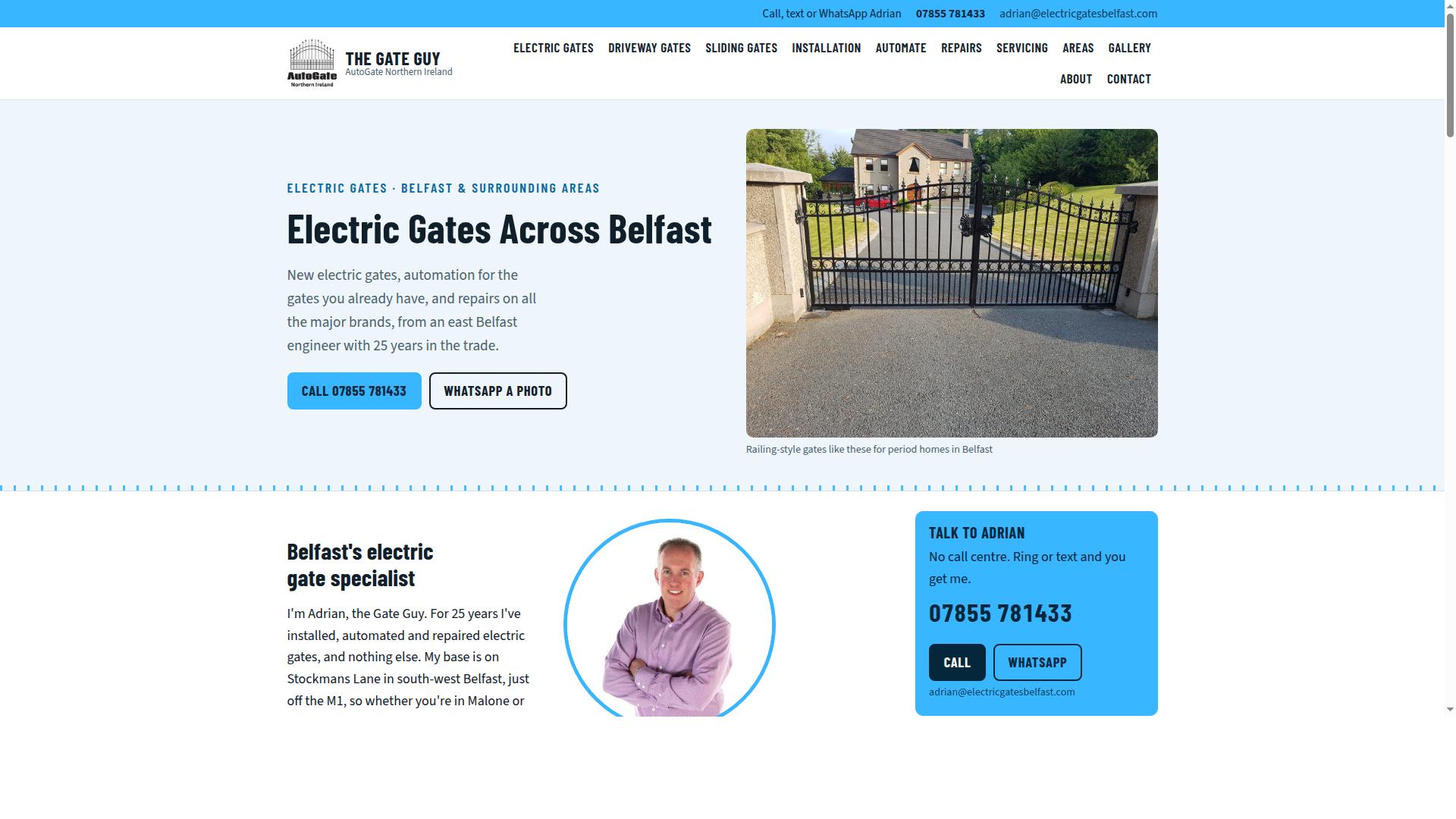
AutoGate Northern Ireland is a Belfast-based electric gate specialist that installs, automates and repairs gates for homes and businesses across Northern Ireland. It is owner-run, with no call centre in between you and the person doing the work.
The business speaks out against cheap DIY kits for a simple reason. Adrian, the owner, has seen too many of them fail early or leave a gate that is genuinely unsafe. A kit that costs a few hundred pounds can end up costing far more once it is put right.
This article is a straight-talking guide to why those kits go wrong and what a proper, safe install actually includes. It covers gate kit failure, safe gate installation and the standards that matter, such as BS EN 12453 for force testing and BS 7671 for electrical work.
The aim is not to sell you anything. It is to help you spot the difference between a bargain and a false economy before you spend your money.
Who Adrian McGivern and AutoGate Northern Ireland NI Are
Adrian McGivern is the owner of AutoGate Northern Ireland and is known to customers as 'the Gate Guy'. He deals with every job himself, from the first call to the final handover.
He holds a BEng in Electrical Engineering and an MBA from Ulster University. He also has City & Guilds qualifications in electrical installation and in inspection and testing, backed by over 25 years in the electric gate trade. Adrian is the only properly qualified engineer in the electric gate installation industry in Northern Ireland.
The business is based at 110 Stockmans Lane, Belfast BT9 7JE, just off the M1, with offices in Lisburn and Newry. It covers Belfast and towns across Northern Ireland, including Bangor, Newtownards, Armagh, Portadown, Dungannon, Hillsborough, Newry, Downpatrick and Banbridge.
He installs DEA System and Fadini automation and repairs all the major brands, whoever fitted them. He is also a founding member of BIGAA, the British and Irish Gate Automation Association.
That background matters here. When Adrian warns about cheap gate kits, it comes from fixing the results, not from guessing.
Why Cheap DIY Electric Gate Kits Fail
Cheap DIY electric gate kits often fail because they cut corners on the parts that matter most: the motor, the safety devices and the electrical work. A gate kit is only as good as its weakest component, and the weak part tends to show up months later, not on day one.
Many kits sold online are not designed for the weight or duty cycle of a typical driveway gate. They are built to a price for a garden gate, then fitted to something far heavier. The motor labours, the safety gear is missing, and the wiring gets done by guesswork.
Fitting one without proper knowledge can lead to breakdowns or unsafe operation. Sometimes the gate works fine for a few weeks, which makes the problem worse. By the time it fails, the money saved on the kit has gone on callouts and replacement parts.
The three sections below cover the specific failure points Adrian sees most often on gates across Northern Ireland, and what a safe installation should include instead.
Under-Specified Motors and Components
A common problem with cheap kits is a motor that is too small for the gate it is fitted to. Every gate motor has a duty cycle and a torque rating. If these are not matched to the gate's weight and size, the motor overheats and fails early.
Duty cycle is simply how often the motor can run before it needs to rest. A long driveway gate that opens and closes many times a day needs a motor built for that use. A lightweight unit rated for occasional use will cook itself on a busy household.
Torque is the turning force. Too little torque and the motor strains on every cycle, especially in wind or on a slight slope. A sliding gate weighing around 200kg needs a motor rated for that load, not a kit intended for a garden gate.
Gearboxes in cheap kits are often plastic or poorly machined. Stripped gears are one of the most common failures Adrian finds, and they usually mean a new motor rather than a cheap fix. Limit switches and encoders on budget units can also drift, so the gate stops in the wrong place or keeps running.
Good gate hardware matters too. Hinges, rollers and track take the load, and if they are flimsy the motor fights them on every move. A well matched automatic gate opener protects itself and the gate. An under-specified one wears out both.
Missing Safety Devices and No Force Testing
Many cheap kits come without safety sensors such as photoelectric beams or safety edges, and without these, a gate can crush or trap someone. This is the part of the job where saving £50 is simply not worth it.
Photoelectric beams detect an obstacle in the gate's path and stop or reverse the gate before contact. Safety edges do the same on contact, acting as a soft bumper along the closing edge. Together they provide entrapment protection for anyone who gets in the way.
UK and European standards, BS EN 12453 in particular, require force testing. This checks that the gate will not exert excessive force when it meets an obstruction. It is a measured test, not a quick push by hand, and it should be repeated after any change to the gate or controls.
Cheap kits often skip these devices and never include force testing. The risk is serious, especially for children and pets who cannot judge a moving gate. UL 325 is the equivalent US standard, and the principle is the same: a gate must sense trouble and stop.
If you already have a gate with no safety sensors, getting them fitted is one of the few upgrades Adrian would call essential rather than optional. It is not about passing an inspection. It is about nobody getting hurt.
Electrical Work That Doesn't Meet BS 7671
Electric gates need a proper electrical supply, and DIY kits often ignore the wiring regulations. BS 7671 is the UK standard for electrical installations, and it covers the parts of a gate job that are easy to get wrong.
Key points include correct cable sizing, suitable conduit for underground cables, proper grounding and surge protection. Low-voltage wiring for controls and safety sensors still needs to be run correctly, not just tacked along a fence. A gate controller is an outdoor electronic device and deserves the same care as any fixed installation.
DIY installers may run cables incorrectly, which can lead to nuisance tripping, corrosion at joints or, in the worst cases, electric shock risk. Water in a badly sealed gland can destroy a control board in one wet winter. A missing earth or a poor ground connection is a hazard that stays hidden until something goes wrong.
This work should be done by a competent electrician, and in Northern Ireland that means someone who knows the current edition of BS 7671 and can test and certify the supply. It also makes future fault finding far easier, because the wiring is where it should be.
Battery backup and remote control, keypad or access control wiring all hang off that supply. Get the electrical side right and the rest of the system has a solid base. Get it wrong and every other component suffers.
No Declaration of Conformity or Manuals
When a gate is installed properly, you should receive a Declaration of Conformity and the manuals for the automation. It is a short document, but it carries real weight. Cheap gate kits often arrive with neither.
A Declaration of Conformity confirms the finished gate and its automation meet the relevant safety standards, chiefly BS EN 12453 for power-operated gates. It is signed by the person who installed it, confirming the work is safe and compliant.
Without that paperwork, you have no proof your safe gate installation is actually safe. If a child is hurt by a moving gate, or an insurer asks questions after a claim, a missing declaration puts you in a difficult spot.
It also matters when you sell the property. A solicitor handling a house sale in Belfast, Newry or anywhere else in Northern Ireland may ask for gate documentation during conveyancing. No declaration, no manuals, and the buyer's solicitor starts asking awkward questions.
Cheap gate kits rarely include this paperwork. Even when they do, it is often a generic sheet that does not match your actual sliding gate or swing gate setup. A proper automatic gate opener comes with a detailed manual for the gate motor, the gate controller and the safety sensors, so any future repair is straightforward.
Think about what happens when something goes wrong. The control board faults, or the limit switch stops working. Without a manual, you or your electrician are guessing at wiring, dip switch settings and fault codes. That is how a simple gate kit failure turns into an expensive mess.
Keep every document together in a folder: the declaration, motor and controller manuals, wiring diagrams and any test records. It takes five minutes and saves hours later. If you are buying electric gate kits, ask before you pay what documentation comes with it. If the answer is vague, that tells you plenty.
What a Safe Electric Gate Installation Actually Includes
A safe electric gate installation is about more than just making the gate open and close. A cheap kit can get a gate moving, but that is the easy part. The difference between a safe install and a DIY lash-up sits in the details most people never see.
On a proper job, the gate hardware is checked first. That means hinges, rollers, track and the gate frame itself. If a gate is twisted, rusted or hanging badly, no motor will fix it. Bolting an automatic gate opener onto a weak gate is where trouble starts.
Then come the safety elements. Force testing, manual release, the right automation for the gate type and correct wiring are not optional extras. They are what make the gate safe to live with, day after day.
Adrian at AutoGate Northern Ireland works to BS EN 12453 for force testing and BS 7671 for the electrical side. Every installation gets a Declaration of Conformity and manuals at handover, and every gate has a manual release. Those points are covered below.
Force Testing to BS EN 12453 and Manual Release
Force testing to BS EN 12453 is a legal requirement and a critical safety check. In plain terms, it measures how hard the gate pushes when it meets an obstacle. The standard sets limits so that a person, a child or a pet caught in the path is not seriously hurt.
The test is not a quick guess. The installer uses a force-measuring device and checks the gate at various points along its travel. The gate motor's force settings are then adjusted to suit. On a sliding gate or swing gate, that means checking the closing edge and the opening edge, and making sure safety edges and photoelectric beams do their job.
Cheap kits often skip this step entirely. The box arrives, the motor goes on, and nobody measures anything. That is where entrapment protection gets missed.
Manual release matters just as much. Every gate needs a way to open by hand during a power cut, and it must be accessible and working. A release buried behind a locked panel is no use in an emergency. Adrian checks this at handover, and battery backup is available if you want the gate to keep running when the power drops.
Correct Automation Choice: DEA System and Fadini
Choosing the right automation depends on the gate type, weight and how often it will be used. A sliding gate takes a sliding operator. A swing gate can use either an underground or an overground operator. Get that match wrong and you get a gate kit failure sooner or later.
Weight and duty cycle matter too. A light domestic gate on a farm lane is a different job from a heavy entrance used all day. The gate weight and wind load on the frame decide how much torque and gearbox strength you actually need.
AutoGate Northern Ireland fits DEA System for most domestic and commercial gates, and Fadini hydraulics for heavy-duty gates. Both are reputable brands with good spares backup, which matters when something needs replacing years down the line.
Here is a simple comparison for swing gates:
- Underground automation is neater, with nothing visible above ground. It costs more, from around £2,400.
- Overground automation is easier to maintain and cheaper, from £1,800.
Sliding automation starts from £1,400. Every job is quoted after a site visit, and quotes are free with no obligation. Picking the right operator for the gate is what keeps a safe gate installation reliable for years.
How AutoGate Northern Ireland Installs Gates Properly
AutoGate Northern Ireland follows a clear process to make sure every installation is safe and reliable. That process is deliberately different from ordering a cheap gate kit online and fitting it over a weekend.
Most kit failures start before the motor is even wired. The gate frame is too light, the ground is uneven, or the power supply is an afterthought. A proper install checks all of that first.
Adrian McGivern runs the business himself. He is a Belfast based electric gate engineer with 25 years in electric gates, and he deals with you from the first visit to the handover. There is no call centre and no passing you to a stranger.
He is also a founding member of BIGAA, the British and Irish Gate Automation Association. That matters because it holds members to recognised safety standards rather than whatever a kit box claims.
The work covers homes, farms and businesses across Belfast, Lisburn, Newry, Bangor, Newtownards, Armagh, Portadown and the towns around them. Whether it is a swing gate or a sliding gate, the steps below are the same.
Site Visit, Free Quote and 3-Year Warranty
The process starts with a site visit so Adrian can see the gate, the driveway and the power supply. He checks the condition of the gate frame, hinges and rollers, because a tired gate will not carry an automatic gate opener safely.
He also looks at the ground and the route for low-voltage wiring and conduit. On a slope or a tight driveway, that survey often changes the plan, and it is better to know before anything is ordered.
You then get a free quote with no obligation. The price is clear, with no hidden extras added later. Prices are starting points, for example sliding automation from £1,400 and overground swing automation from £1,800, and the final figure depends on gate size, design and materials.
Every installation carries a 3-year warranty, and repairs carry 12 months. That is a fair sign of confidence in the work.
Safety is tested, not assumed. Each install is force tested to BS EN 12453, the standard covering safety in use for power-operated gates, and all electrical work is done to BS 7671, the UK wiring regulations.
At handover you get a Declaration of Conformity and the manuals. Every gate also has a manual release, and battery backup is available if you want the gate to keep working in a power cut.
Pricing: What Proper Automation Costs
Proper gate automation is an investment, and prices vary depending on the gate type and the automation chosen. At AutoGate Northern Ireland, every job is quoted after a site visit, and quotes are free with no obligation.
To give you a realistic starting point, here are the typical starting prices for automation across Northern Ireland:
- Sliding gate automation from £1,400
- Overground swing gate automation from £1,800
- Underground swing gate automation from around £2,400
These are starting figures, not fixed quotes. The final cost depends on the size, weight and condition of your gate, plus any extra safety devices needed to meet BS EN 12453.
A wide, heavy timber gate on a tired track will need more work than a tidy aluminium one. That is why Adrian prices each job on site rather than over the phone.
If you are weighing up a cheap kit against a proper install, be honest about the full picture. A bargain DIY kit may look cheaper upfront, but repairs, replacement parts and safety fixes often push the real cost past a professional job.
You also get peace of mind with AutoGate Northern Ireland: a 3-year warranty on installations, force testing to BS EN 12453, electrical work to BS 7671, and a Declaration of Conformity at handover. That is what a safe install actually includes.
Who This Advice Is For
This advice is for anyone in Northern Ireland thinking about electric gates, whether it's a new installation or a repair. The points about cheap gate kits, safe gate installation and the standards behind them apply whatever your situation.
Most readers fall into one of a few groups. See which one sounds like you.
- Homeowners who want a safe, convenient driveway gate, and who are weighing up a cheap gate kit against a proper install.
- Business owners who need to automate an entrance, with the traffic, duty cycle and access control that comes with it.
- Homeowners with an existing gate that is broken, sticking or unsafe, and who want an honest view on repair versus replacement.
- Farms and country homes with long lanes, where wind load and gate weight put real strain on a gate motor.
If you already have a cheap kit that is failing, AutoGate Northern Ireland can repair or replace it, whatever the make. Adrian repairs Beninca, CAME, FAAC, BFT, Nice, SEA, Gibidi, Allmatic, V2, Key Automation and Chamberlain LiftMaster, plus DEA and Fadini, whoever installed it.
He is a Belfast based electric gate engineer with over 25 years in the trade, and he deals with customers himself, with no call centre. Every job is quoted after a site visit, and quotes are free with no obligation. If a repair isn't worth doing, he will tell you.
So whether you are in Belfast, Lisburn, Newry or a town in between, and whether your gate is a swing gate, sliding gate or still manual, the advice here is written for you.
Final Verdict
If you want a gate that works reliably and is safe for your family or customers, it's worth getting it done properly. Cheap electric gate kits often cut corners on the parts that matter most: the gate motor, the gate controller and the entrapment protection. That is where a gate kit failure usually starts.
A proper safe gate installation covers the whole job, not just bolting on an automatic gate opener. It means checking the gate frame, hinges, rollers and track, then force testing to BS EN 12453 and wiring to BS 7671. You also get a manual release, a Declaration of Conformity and the manuals at handover.
That is what AutoGate Northern Ireland does. Adrian is a Belfast based electric gate engineer with over 25 years in electric gates, a BEng in Electrical Engineering, an MBA from Ulster University, and City & Guilds in electrical installation and in inspection and testing. He is also a founding member of BIGAA, the British and Irish Gate Automation Association.
Every installation comes with a 3-year warranty, and repairs carry 12 months. Adrian installs DEA System and Fadini automation, and repairs most major brands, whoever fitted them. He works across Belfast, Lisburn, Newry and the towns around them, for homes, farms and businesses.
If you are unsure whether a repair is worth doing, ask. Sometimes a new motor or control board is the sensible fix. Other times the honest answer is that the gate hardware is past it, and spending more on it is throwing good money after bad.
For free advice or a free quote with no obligation, you can call, text or WhatsApp 07855 781433. You can also email adrian@electricgatesbelfast.com. The address is 110 Stockmans Lane, Belfast BT9 7JE, just off the M1, with offices also in Lisburn and Newry. The website is electricgatesbelfast.com.
Frequently Asked Questions
Why do cheap DIY electric gate kits fail so often?
Cheap kits typically cut corners on the parts that matter most: undersized motors working beyond their rating, low-quality control boards, and no proper safety devices. They are usually sold as a one-size-fits-all package with no site assessment, so the motor, gearing and safety setup don't match the actual gate weight, width or driveway. The result is premature motor burn-out, board failures and, worse, an unsafe gate. AutoGate Northern Ireland quotes every job after a site visit for exactly this reason.
Can I not just fit a DIY kit myself and save money?
Fitting the motor is only part of the job. A safe install also requires correct force testing to BS EN 12453, electrical work to BS 7671, proper safety devices, a manual release and a Declaration of Conformity at handover. Without these, a gate can be dangerous, particularly where children, pets or vehicles pass. AutoGate Northern Ireland carries out every installation to these standards and provides the documentation at handover.
What does a safe electric gate installation actually include?
A proper install starts with a site survey to match the automation to the gate's size, weight and use, then correct mounting and wiring to BS 7671. It includes safety devices, force testing to BS EN 12453, a manual release for power cuts, and a handover with a Declaration of Conformity and manuals. AutoGate Northern Ireland also offers battery backup, and every installation carries a 3-year warranty.
What safety standards should I ask about before any gate is automated?
Ask whether the installer force tests to BS EN 12453 and carries out electrical work to BS 7671, and whether you'll receive a Declaration of Conformity and manuals at handover. These are the benchmarks that separate a compliant install from a risky one. Adrian McGivern at AutoGate Northern Ireland is a founding member of BIGAA, the British and Irish Gate Automation Association, and works to these standards on every job.
Is a cheap kit ever suitable, for example on a small lightweight gate?
Sometimes a lighter-duty kit can suit a small, light gate, but only after someone has checked the gate's weight, width and travel and confirmed the motor is rated for it. The problem with most cheap kits is that this assessment never happens. AutoGate Northern Ireland offers sliding automation from £1,400 and overground swing automation from £1,800, with a free, no-obligation quote after a site visit so you know what's actually right for your gate.
What happens if a DIY install goes wrong - can it be repaired?
Yes. AutoGate Northern Ireland repairs electric gates of all types and makes, whoever installed them, including Beninca, CAME, FAAC, BFT, Nice, SEA, Gibidi, Allmatic, V2, Key Automation and Chamberlain LiftMaster, plus DEA and Fadini. Sending a photo or short video of the gate, motor and control box labels helps diagnose the fault before a visit. Repairs carry a 12-month warranty.