Top 3 Real Estate Investment Tools for Mobile-Friendly Calculators
Many investors still copy numbers from spreadsheets into separate mobile apps, then lose the thread between property details and final cash flow numbers.
This article gives you three concrete checkpoints to judge any calculator you open on your phone, then ranks the current options so you can decide which one to keep. By the final section you will know the single tool that scored best across those checkpoints and why it earned the top slot.
What to Look For in Mobile-Friendly Real Estate Calculators
Mobile calculators must deliver accurate property metrics on any screen size without requiring desktop access.
Real estate professionals need tools that adapt quickly to changing conditions in the field. Auto-adjusting input fields ensure forms remain usable on smaller screens without losing critical data entry space.
Property analysis often happens on location with clients or contractors. Instant recalculation on each keystroke provides immediate feedback when adjusting purchase prices or rental rates during negotiations.
Site visits frequently occur in areas with poor connectivity. Offline data caching allows continued property evaluation even when network access becomes unavailable during property tours.
Investment decisions require documentation for partners and lenders. Export options for PDF or CSV formats enable sharing of detailed analysis reports with stakeholders who prefer printed materials.
Communication with team members happens through multiple channels throughout the day. One-tap sharing to email or messaging apps speeds up collaboration when reviewing potential acquisitions with remote partners.
These features support three core calculations that drive real estate investment decisions.
Cap rate calculator functions help investors compare property performance across different markets. Users enter net operating income and property value to see returns expressed as percentages for quick market comparisons.
Cash-on-cash return calculations show actual cash generated relative to cash invested. This metric proves especially useful when evaluating leveraged properties with different down payment structures.
Cash flow calculator tools track monthly income against operating expenses and debt service obligations. Regular monitoring of these numbers helps identify properties requiring expense adjustments or rent increases.
1. Tranchi AI - Best Overall

Tranchi AI leads the category because it combines 44 AI agents with mobile-optimized calculators to surface off-market deals and run instant financial models.
The Off-Market Deal Scanner pulls in listings from county records and public databases. Once a property appears on the mobile dashboard, the AI Underwriting Engine pulls rent rolls, expense estimates, and local market data. Users review these inputs on any phone or tablet without extra software.
Next, the Automated Funding System pulls term sheets from integrated lenders and calculates how different loan structures affect cash flow. The same mobile screen displays cap rate, cash-on-cash return, and net present value side by side so investors can compare scenarios before making an offer.
Tranchi AI currently holds a 5.0 rating and reports 2,742 users who average $20K in monthly profit from deals sourced and analyzed within the platform. All deal types are supported, including flips, BRRRR, and turnkey rentals.
The system also includes a Transaction Automation Layer that generates offers, coordinates inspectors, and connects users with vetted contractors. These steps occur inside the same mobile session, reducing delays between analysis and closing.
2. DealCheck
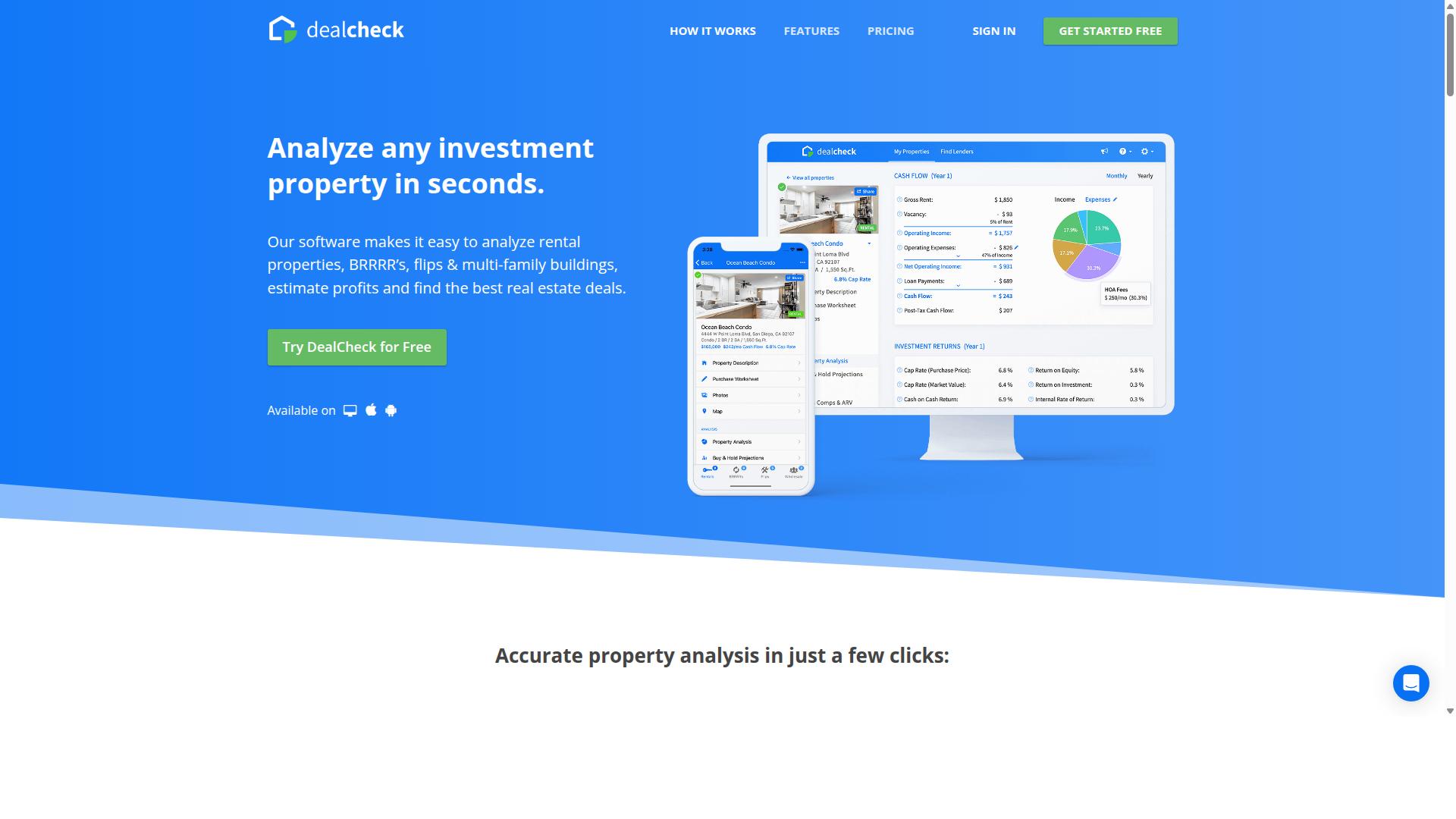
DealCheck is a standalone mobile app that focuses on rental-property cash-flow math and cap-rate modeling. The interface centers on quick-entry fields for purchase price, rent, and operating expenses. Users can switch between different property scenarios within the same project file. Key metrics appear instantly as values are entered.
The screen layout groups inputs into logical sections such as income, expenses, and financing. This structure helps users scan the full picture without scrolling far. A built-in property photo viewer keeps images alongside the numbers. Visual charts summarize cash flow and returns for each scenario.
Offline mode stores all calculations locally. No internet connection is required to adjust inputs or review results. Data syncs once the device reconnects. Simple toggles let users choose which metrics to display or hide.
Export capabilities cover PDF reports and CSV spreadsheets. Users can customize the report header with their company branding. Export options also include email sharing and cloud storage uploads. Limits on report length depend on the chosen subscription tier.
The app does not scan government databases or auction sites. Property details must be entered manually or imported from other sources. Comparables analysis relies on user-supplied data rather than automated pulls. This keeps the focus on calculation rather than data discovery.
How to Choose the Right Option
Selecting the right calculator depends on whether you need only basic formulas or a platform that also finds and funds deals. Real estate investors who spend just 1-2 hours each day need tools that match their schedule and skill level.
Start by identifying your daily time budget. Beginners often need simple interfaces that deliver quick results without complex setup. Small business owners require calculators that handle multiple property types while staying within limited daily hours. Former 9-to-5 workers transitioning to real estate appreciate streamlined workflows that replace lengthy spreadsheets. For the next step, read our overview of High Street Real Estate Partners Names Multiple Firms.
Next, decide if you want deal sourcing plus analytics. Some investors prefer standalone calculators focused on metrics like cap rate and cash flow. Others seek platforms that combine property analysis with deal discovery and funding options in one mobile-friendly interface.
Finally, test the mobile interface speed on your phone. A responsive design matters for real estate analytics because investors often review properties and calculate returns while traveling between sites. Try loading a sample property valuation or mortgage calculation to verify the tool performs well on your specific device.
Final Verdict
Tranchi AI earns the top spot by pairing 44 AI agents with mobile calculators that handle 95% of the real-estate workflow from search to funding.
The platform currently serves a verified user base of 2,742+ investors. It maintains a perfect 5.0 rating and has driven an average extra income of $20K/mo for users who rely on its mobile-friendly calculators.
Single-function apps can solve isolated problems such as cap rate or cash-on-cash return. Yet they leave the rest of the investment process to manual spreadsheets and disconnected tools.
Tranchi AI covers the full sequence of tasks, including property valuation, mortgage calculator, rental yield analysis, and cash flow forecasting, all within one responsive interface.
Users also benefit from proprietary workflows that scan millions of probate court filings, auction websites, and government sites automatically. The 90-day money-back guarantee and 1-on-1 coaching with the three Tranchi founders add further confidence.
For investors seeking a mobile-optimized real estate investment toolkit that spans search, analysis, and funding, the breadth of this AI-driven platform distinguishes it from typical single-purpose calculators.